Posts

Showing posts from 2017

Gas Engines with a new face. autosmithcar.com
Image
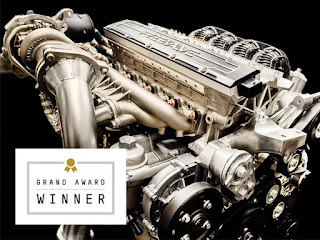
KOENIGSEGG FREEVALVE: NEW LIFE FOR THE GAS ENGINE For more than a century, the internal combustion engine has relied on the ungainly camshaft. This spinning rod with variable lobes sits atop the engine, where it opens and closes intake and exhaust valves during the combustion cycle. But the camshaft has a limited range of motion, so its control over the valves is imprecise. This is the root of engine inefficiency. In April, Swedish supercar-maker Koenigsegg debuted the world’s first camless engine—the FreeValve—on a Chinese Qoros concept car. FreeValve forgoes the camshaft for electro-hydraulic-pneumatic actuators. They attach right to intake and exhaust valves, so engineers can control combustion within each cylinder. The design gets more power—imagine a four-cylinder getting 250 horsepower, sans turbo—and greater fuel economy out of otherwise standard engines. Cams, may you rest in peace. Koenigsegg I found this extremely interesting because no one ever thinks of gas ...
Cars That Communicate with Each Other and the Road.... autosmithcar.com

Car manufacturers and the U.S. government are seriously looking into and researching two technologies that would enable future cars to communicate with each other and with objects around them. Imagine approaching an intersection as another  car runs a red light . You don't see them at first, but your car gets a signal from the other car that it's directly in your path and warns you of the potential collision, or even hits the  brakes  automatically to avoid an accident. A developing technology called Vehicle-to-Vehicle communication, or  V2V , is being tested by automotive manufacturers like Ford as a way to help reduce the amount of accidents on the road. V2V works by using wireless signals to send information back and forth between cars about their location, speed and direction. The information is then communicated to the cars around it in order to provide information on how to keep the vehicles safe distances from each other. At MIT, engineers are working on ...

Gesture Control- BMW 7 Series

Image
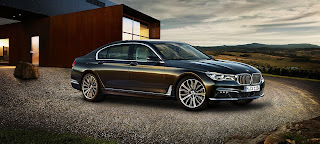
1. Gesture Control In the  2016 BMW 7 Series , your finger becomes a magic wand. When you place your hand above the shifter, an infrared camera detects your movements, allowing you to control certain features. Answer a Bluetooth call by pointing at the screen, or adjust the music volume by twirling your finger. Warning : Don’t flip off other drivers, or you might accidentally switch the radio to smooth jazz. When does to much technology become unsafe for driving? autosmithcar.com

electric Car that can go 600 miles on a single charge!.....autosmithcar.com

Image
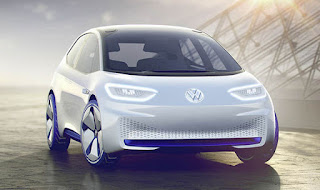
1. Zero emissions 2. 400-600 mile range on single battery charge 3.Automated driving mode from 2025 4. Can receive parcels if the owner isn¹t at home through a new delivery service 5. It looks pretty cool When I read the article the key point was the distance the car could travel on a single charge if you remember back to Saturn and the Ev-1 it had capabilities of only 150 miles when at the time an average commuter was driving over 300 a week.  Everyone understands you can plug in the Chevy Volt but with how fast the world moves the batteries simply need to last longer in my opinion in order for then to truly hit the market in force.  Maybe VW has the answer. autosmithcar.com

"Emotion Engine" autosmithcar.com

Image
Known as a “concept automated EV vehicle,” the much-buzzed-about NeuV offers a glimpse at what a commuter car of the near future might look like. Fueled by artificial intelligence, or the “emotion engine,” the boxy shape first and foremost suggests function over form, with a user-friendly, computer-infused interior designed to react to occupants. Honda has hinted that the NeuV would address traffic congestion, possibly through vehicle-to-vehicle communication systems. The Japanese automaker is also unveiling a concept motorcycle to showcase its robotics advancements as part of its theme of “Cooperative Mobility Ecosystem.” Artificial Intelligence is really not a new concept, think of smart phones and their location services when you use a mapping application.  I did research the motorcycle Honda is releasing that is mentioned in the article but not much gathered yet.  The vehicle still integrates with the driver so control is never lost but maybe focus if you don't always ...

This bizarre-looking electric van is designed to work with a drone to optimize package delivery.

Image
Mercedes' Vision Van  is part of a $562 million investment over the next five years to create a network of all-electric vans and drones for a rapid delivery service. The van has a fully automated cargo space that loads packages and alerts the driver when approaching a drop-off location for one of them. It will then push that package through a hatch on the roof so a drone can grab it and fly it to the right location. It's still unclear when we'll see the van in use, but it's an interesting step showing Mercedes' intent to revolutionize the logistics of package delivery. This article is not kidding, there is a mass push to have this done to improve logistics and speed of deliveries as speed equals more money, more deliveries, larger cash flow, numerous sources have pointed out the ability to do this.  Think about it, we have drones you can buy in a toy store had the manufacturing power and money of a automotive monster and it just might work.   a...

autosmithcar.com

Image
 Nissan unveiled a steering wheel that transforms into a tablet. Business Insider has the actual video of how it works, it is insane, but it is designed for cars that will no longer need a driver so if we actually ever see one will remain the mystery.  They have tried to have a version of the same thing on the passenger side but no real evidence we will see it. autosmithcar.com

Hydrogen Vehicles Are Coming!

Image
Italian design house Pininfarina first unveiled the concept car in March, but production models are slated to arrive in 12 to 14 months. Called  the H2 , the car has a killer acceleration time of 0-60 mph in 3.4 seconds and a top speed of 186 mph. Hydrogen cars are interesting because they have perks EVs still don't have, like longer ranges and a faster refuel time. But without a real network of hydrogen stations to support them, hydrogen cars will have a difficult time going mainstream.  Still, the H2 entering production shows some promise for seeing more of these cars in the future, even if just in a limited capacity. They made a hydrogen car and people have wanted them for cleaner energy but the problem faced from what I have read is how to turn gas pumps over to be able to handle multiple fuels..maybe they might have a plan. autosmithcar.com

Cameras instead of side mirrors!

Image
Lexus recently leaked a photo of its UX concept SUV, and it shows that the sideview mirrors have been replaced with cameras. This isn't the first time we've seen a concept car without mirrors, but it's worth paying some extra attention to the feature showing up on a Lexus. Japanese automakers got the OK in June to  make and sell mirrorless cars , making it one of the first countries to embrace the technology. Considering Lexus is owned by Japanese automaker Toyota, we're likely to see more of this tech in use going forward. Now that we have covered the past a bit i decided to jump to the future.  It is being reported that this may become standard but I always believed to trust your own eyes and not a machines. autosmithcar.com
Image
Barrett-Jackson auctioning Shelby GT500 Super Snake for Las Vegas first responders Las Vegas EMTs, police, fire departments will get all proceeds from the Mandalay Bay auction sale. Love to see good news, when all you read is such horrible things happening.
Image
The first car was invented in  1886 . The tricycle-like car may have used gasoline and been able to move at a maximum speed of 10mph, but it sure wasn't covered with car insurance. The first recorded auto insurance policy was sold in  1898  from Travelers Insurance and cost only $12.25. A sideways approach to innovations as I like to call it.  Insurance in general became key to helping consumers in troubled times.  With vehicles being new to the world and replacing a horse that usually did not crash, insurance became crucial to give consumers a sense of comfort in their "big" purchase which was also a big venture for a consumer at the time. autosmithcar.com

autosmithcar.com

1934, The First One-Piece All-Steel Roof Fisher Body developed the industry’s first one-piece all-steel roof, called the Turret Top, and introduced it on all GM cars built in the U.S., beginning with the 1935 model year Chevrolet lineup. Previously, car roofs had been built around a wooden frame covered with canvas, limiting both the vehicle’s structural integrity and its design potential. The second photo is a unique testimony to the turret top’s strength. An innovation that was based more on the design side of things in the auto industry which led to engineering the body of a vehicle not simply based on what the factory produced. autosmithcar.com
Image
Modern  cruise control  (also known as a speedostat or tempomat) was  invented  in 1948 by the  inventor  and mechanical engineer Ralph Teetor. His idea was born out of the frustration of riding in a car driven by his lawyer, who kept speeding up and slowing down as he talked. I remember first starting in the business cruise control was asked about by customers regularly, now it is bluetooth.   autosmithcar.com

Proactive and reactive safety features.

Image
Elmer Berger is usually credited with inventing the rear-view mirror, though in fact he was the first to patent it (1921) and develop it for incorporation into production streetgoing  automobiles  by his Berger and Company. Some consider the creation of the rear view mirror a minor innovation.  The safety it provided during the development of the automobile is crucial, why I believe it deserves noting.  Now we have back up sensors, cameras with those features not beeping or sending alerts to drivers for caution.  The creation of the seat belt dominates in the safely features developed in vehicles, then the airbag but it is the small things that are important because keep in mind the mirror was to prevent accidents as the seat belt and air bag were desisigned for when you got into an accident.  Proactive and reactive. autosmithcar.com

The First Diesel Engine

Image
In the  1890s , Rudolf Diesel invented an efficient, compression ignition, internal combustion engine that bears his name. Early diesel engines were large and operated at low speeds due to the limitations of their compressed air-assisted fuel injection systems. Defining innovations can be challenging.  Currently we see mass produced gas trucks and mass produced diesel trucks.  Powerstroke, Cummings, Durmax but what was the original use?  It was not until the 1920's that commercial units were able to use the design and the 1930's for passenger units.  it took 13 years to produce the first functioning design as steam power was the most prominent source for large industries.  Now we have seen diesel engines revolutionize.   autosmithcar.com
Image
In 1911 the electric  starter was invented and introduced on the market in the 1912 Cadillac.  Before this you had to use a crank to get the engine going.  It was believed that an electric starter would never be small enough to be fitted under the hood of a car.  Now we have transponder keys and remote starters.
Image
I decided to skip ahead a little but I believe the prediction for flying cars is older than we think.  We have seen recently the production of self driving auto mobiles.  In the 90's there was design for vehicles that parallel parked on their own using sensors.  Drivers education began to not teach parallel parking for part of your exam to obtain your license.  I remember i had to learn and when I started in the business, you had the amazing feature of turn signals on your side mirrors, soon we had back up cameras, brake assist, hill stop systems and so many other features that took driving away from the driver.  What are the safety measures?  Can a car swerve in a storm at the last second, can a car stop fast to allow a family with groceries crossing the street.  Does a car run faster when you are late for work.  However I do admire the innovations but is it more the vehicle or the driver?
Image
One of the most important modern innovations is the ability to operate things hands free especially with laws against texting and driving being passed.  It started with cells phones like you see in the picture with wired microphones that attached to your visor then it moved to steering wheel mounted audio controls where you never had to look down at your radio and could always keep your eyes on the road, then you had integrated bluetooth that would sync with your wireless device making the driver able to operate important functions without taking their hands off the wheel, also you don't have to get pulled over an get a ticket! autosmithcar.com
Image
People called me crazy for claiming this as an innovation.  As cars and trucks became more readily available and more "used", people began to trade them in.  There was no guide for what a car would be worth after someone else owned it and if the car was being resold.  NADA also known as the National, Automotive, Dealers, Association, gave a structured and accurate guide to pricing.  It provided wholesale values, auction values, retail values and soon became available to not just dealers but consumers as well.  The guide would provide values based on region, depreciation and would at a median line to pricing vehicles.  
Image
To continue with the innovation of radio's being added to vehicles, soon their was competition in engineering field for quality sound.  It no longer was just about the music, it was about clarity.  Alpine, Bose, to name a few went right at it to gain a hold in the auto industry, soon the feature turned it a feature on top of a feature, "how many speakers?" Does it have the Bose premium sound?"  autosmithcar.com
Image
Look at music today, with I-pods, XM radio, all the apps you can download like Pandora and Spotify and hook in your aux cord and rock out.  At one point it was silence.  Radio became an "add" on feature.  You can see the pricing in one of the first marketing ads.  These were times when a car drive was a family event, an outing of sorts, not simply a means of travel.
Image
Air Conditioning became a huge feature that boosted the auto industry.  Primitive to start but became one of the biggest focal points in the selling process and is still marketed today with duel climate control or rear climate control.  Everything is the same but just more! An example of how powerful the addition of AC was to marketing vehicles. autosmithcar.com
Image
This was part of a marketing campaign when  power steering became a major feature and add on. autosmithcar.com
Image
In 1951 the age of power steering began, making smoother driving vehicles.  The Auto industry began a massive marketing campaign, using the new innovation to increase sales.  Look at vehicles today, such a standard option its not even thought of as feature.  Back in the 1950's a saleperson would say "And guess what, it also includes power steering."  How things have changed.