Posts

Showing posts from November, 2017

Gas Engines with a new face. autosmithcar.com
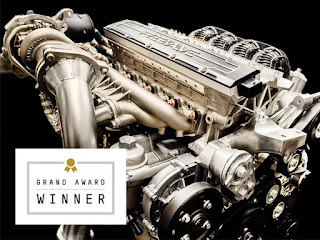
Image
KOENIGSEGG FREEVALVE: NEW LIFE FOR THE GAS ENGINE For more than a century, the internal combustion engine has relied on the ungainly camshaft. This spinning rod with variable lobes sits atop the engine, where it opens and closes intake and exhaust valves during the combustion cycle. But the camshaft has a limited range of motion, so its control over the valves is imprecise. This is the root of engine inefficiency. In April, Swedish supercar-maker Koenigsegg debuted the world’s first camless engine—the FreeValve—on a Chinese Qoros concept car. FreeValve forgoes the camshaft for electro-hydraulic-pneumatic actuators. They attach right to intake and exhaust valves, so engineers can control combustion within each cylinder. The design gets more power—imagine a four-cylinder getting 250 horsepower, sans turbo—and greater fuel economy out of otherwise standard engines. Cams, may you rest in peace. Koenigsegg I found this extremely interesting because no one ever thinks of gas ...

Cars That Communicate with Each Other and the Road.... autosmithcar.com

Car manufacturers and the U.S. government are seriously looking into and researching two technologies that would enable future cars to communicate with each other and with objects around them. Imagine approaching an intersection as another  car runs a red light . You don't see them at first, but your car gets a signal from the other car that it's directly in your path and warns you of the potential collision, or even hits the  brakes  automatically to avoid an accident. A developing technology called Vehicle-to-Vehicle communication, or  V2V , is being tested by automotive manufacturers like Ford as a way to help reduce the amount of accidents on the road. V2V works by using wireless signals to send information back and forth between cars about their location, speed and direction. The information is then communicated to the cars around it in order to provide information on how to keep the vehicles safe distances from each other. At MIT, engineers are working on ...